Reliable Transportation for Daily Driving
Gas Vehicle Repair in Bossier City for families and commuters dealing with unexpected breakdowns and deferred maintenance
Gasoline vehicles used for daily commuting and family transportation accumulate wear patterns tied directly to operating conditions, where short trips prevent engines from reaching full operating temperature and stop-and-go traffic increases brake and transmission stress beyond highway driving equivalents. Redemption Automotive handles full-service repair for standard gasoline-powered vehicles in Bossier City, covering engine, transmission, electrical, and cooling systems across all major makes and models. Routine maintenance extends component life by replacing fluids before they lose protective properties and by identifying wear patterns early when corrections are straightforward rather than waiting until secondary damage has occurred.
The service addresses engine misfires, transmission shift irregularities, cooling system leaks, electrical charging faults, and brake performance degradation that develops gradually during normal use. Early diagnostics prevent situations where a failing alternator damages the battery and voltage regulator, or where a small coolant leak leads to overheating that warps cylinder heads.
Arrange an inspection to evaluate current vehicle condition and identify which systems need attention before minor issues escalate into more extensive repairs.
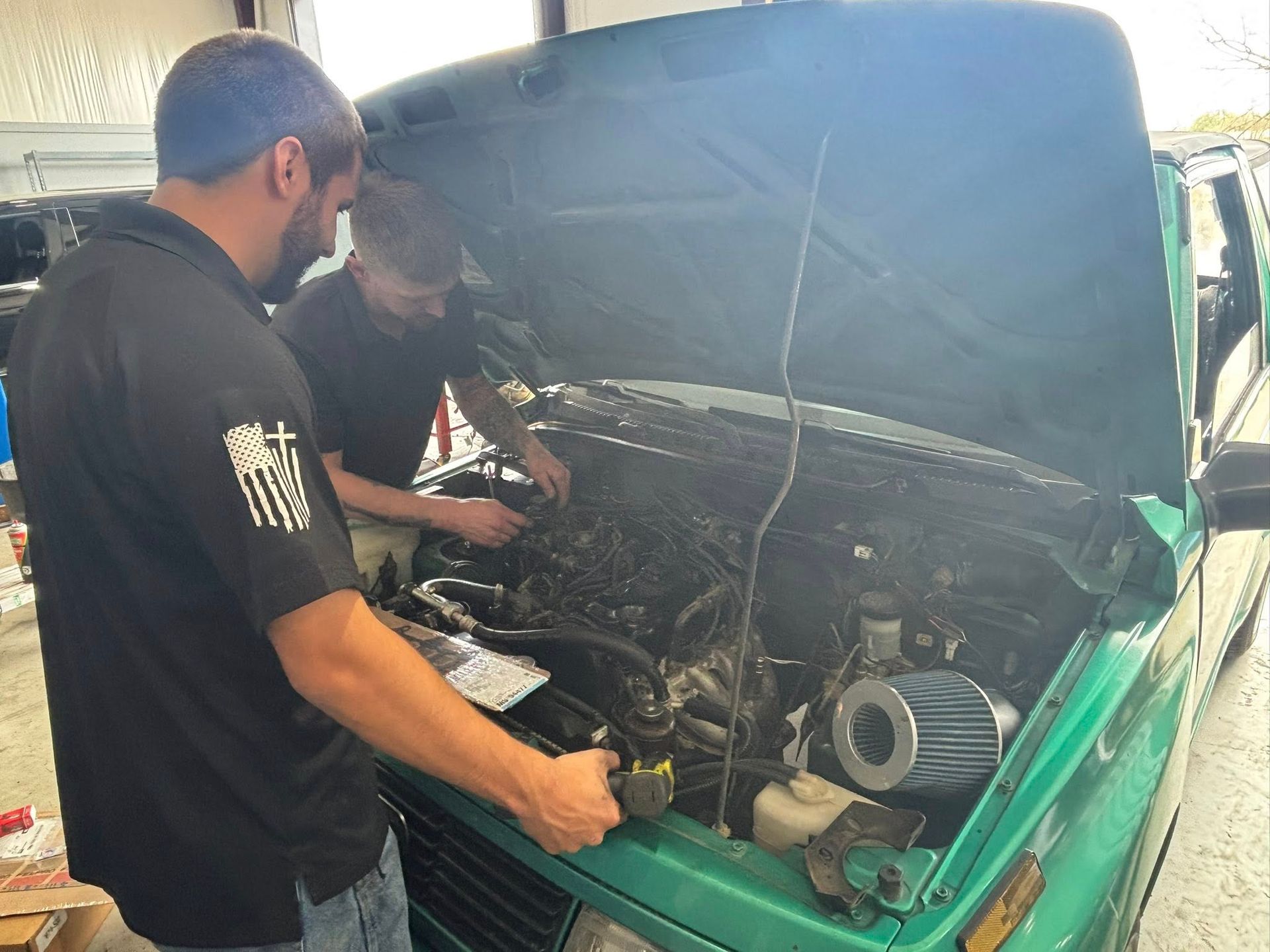
What Gasoline Systems Require Over Time
Gas vehicle repair addresses the reality that combustion byproducts, heat cycles, and mechanical friction degrade components on predictable timelines tied to mileage and operating conditions. Engine oil loses viscosity and accumulates combustion acids, transmission fluid breaks down under heat and clutch material contamination, and brake fluid absorbs moisture that lowers its boiling point and allows vapor formation during hard braking.
You will notice smoother engine idle after spark plugs and ignition coils are replaced when misfires are corrected, firmer brake pedal feel once air and moisture are purged from hydraulic lines, and more predictable transmission behavior when fresh fluid restores proper clutch pack engagement and valve body operation. These changes are not subjective improvements but measurable corrections that return systems to specifications they met when components were new.
Cost-effective repair prioritizes components based on failure risk and safety impact, addressing brake system wear and cooling system integrity before convenience features, and replacing wear items like belts and hoses during other service work to avoid separate labor charges for components that share access points.
Answers to Frequent Service Questions
Gas vehicle owners often have similar questions about when service is needed and what specific repairs actually accomplish, particularly when multiple systems require attention simultaneously.
What does full-service repair include for gas vehicles?
Full-service capability means diagnosing and repairing all systems rather than specializing in one area, so engine performance issues, transmission concerns, electrical faults, and brake problems are all addressed in one facility without referrals to separate shops for each system.
How do short trips in Bossier City affect vehicle longevity?
Short-trip driving prevents engines from reaching temperatures that evaporate fuel and moisture contamination from crankcase oil, accelerates exhaust system corrosion from condensation that never fully evaporates, and keeps catalytic converters below operating temperature where they cannot efficiently process emissions.
Why do multiple problems sometimes appear at once?
Vehicles accumulate age-related wear across all systems simultaneously, so when mileage reaches thresholds where rubber components harden and fluids degrade, several unrelated systems may require service within a short timeframe simply because they have all reached the end of their service life together.
What are early signs that cooling systems need attention?
Coolant level drops between checks indicate leaks even if puddles are not visible, temperature gauge fluctuations suggest thermostat or coolant flow problems, and heater performance changes in cold weather often precede overheating issues by revealing restricted coolant circulation.
When should transmission fluid be replaced?
Transmission fluid service intervals vary by manufacturer but typically fall between 30,000 and 60,000 miles, and fluid that has darkened significantly or smells burnt has already begun breaking down and should be replaced promptly to prevent transmission damage from inadequate lubrication and heat dissipation.
Redemption Automotive services daily drivers and family vehicles with focus on reliability and transparent repair recommendations. Set up a maintenance evaluation if your vehicle is approaching service intervals or showing symptoms that need diagnosis.